

Can the Police or EFCC Order a Bank to Freeze Your Account Without a Court Order?
Daily Law Tips (Tip 830)
by Onyekachi Umah, Esq., LL.M, MBA, FCIArb (UK)
- Introduction:
Many Nigerians are surprised to discover that they can no longer access the money in their bank accounts. Often, the explanation given by the bank is that the account has been restricted, blocked, or frozen on the instruction of a law enforcement agency such as the Nigeria Police Force or the Economic and Financial Crimes Commission (EFCC). In many cases, the bank will not even inform the account holder; rather, after several failed bank transactions and the account holder contacts the bank, the bank may (mostly orally; “We received a directive from the Police/EFCC to freeze your account”) inform the account holder of the restriction, and the bank expects the account holder to understand and take it up with the law enforcement agency. This raises an important legal question: Can the Police or EFCC lawfully order a bank to freeze a customer’s account without first obtaining a court order? But does the law actually allow security agencies to block your hard-earned money with a visit to your bank, a simple letter, email or phone call? The answer is NO!
In a case our law office, SabiLaw Firm, is managing, our client was merely handed a copy of a letter by the bank to the then Head of the IGP Monitoring Unit of the Nigeria Police Force confirming that the bank has complied with the request of the Nigeria Police Force to place “Post No Debit (PND)” on our client’s bank account. The letter was signed by the bank’s Compliance Team Lead for the Federal Capital Territory. Surprisingly, there was no court order attached to the request letter from the Nigeria Police. What was the basis for the request, and what compliance steps were taken by the bank’s Compliance Team Lead? Well, we are already in court with the bank, seeking justice (including huge financial damages) against the bank and the police.
- Banks and Law Enforcement Agencies are Wrong
Generally, a bank account belongs to the customer, and the customer has the right to access and use the funds standing to his credit. Consequently, any restriction placed on a customer’s account must be justified by law. Banks offer bank accounts to customers for a fee (it is often not free, except for some FinTechs), and the customer deposits and keeps his funds in the account, with both parties agreeing that the bank will safeguard the funds. It is like giving your car to a mechanic to repair and keep for you at a fee, and upon returning to the auto workshop, the mechanic informs you that officers of the Federal Road Safety Corps (FRSC) wrote the mechanic not to allow you to take your car or that they towed away your car. The question will be: on what court order was the car impounded? So, the point here is that your bank accounts and the funds in them are your property, not that f the bank, and no human being, group, institution, or government has the right to access them, check them, remove funds from them, close them, or do anything with your property without a valid court order. The reason for this is simple; every person in Nigeria has the right to design, create, hire, acquire, own, hold, possess and maintain any movable or immovable property in any part of Nigeria; this is a fundamental right. It is also a constitutional right. Whenever the right is violated, the victim has the right to engage a lawyer and sue for monetary compensation (damages) among other claims.
- The 72-hour emergency restriction allowed for the EFCC.
Under Nigerian law, no executive law enforcement agency—including the Nigerian Police Force, the Department of State Services (DSS), the Economic and Financial Crimes Commission (EFCC), or the Independent Corrupt Practices and other offences Commission (ICPC)—possesses the legal power to unilaterally command a bank to freeze or restrict a citizen’s account indefinitely by mere administrative directive.
While the EFCC possesses extensive investigative powers in relation to economic and financial crimes, the freezing of a bank account is generally expected to be backed by lawful authority and judicial oversight. While a permanent or prolonged freeze requires a judge’s signature, the law provides a narrow window for emergency anti-money laundering investigations. The 72-Hour Stop Order provided under Section 7(6) of the Money Laundering (Prevention and Prohibition) Act allows the Nigerian Financial Intelligent Unit, the EFCC or an authorised representative to issue a temporary “Stop Order” to a bank regarding a suspicious transaction or account. This emergency restriction is valid for a maximum of 72 hours only. If the EFCC does not obtain a formal, valid interim freeze order from a competent Court within those 72 hours, the temporary restriction automatically lapses, and the bank is legally required to unfreeze the account immediately. Also, the federal law (the Economic and Financial Crimes Commission [Establishment] Act) establishing the EFCC mandates it to seek a court order before freezing any bank account.
With respect to the Nigeria Police Force, the Police and even the Inspector General of Police do not have a general power to direct a bank to freeze a customer’s account merely because a complaint has been lodged against the customer or because the Police are investigating a matter. Arguably, the Police cannot issue the 72-Hour Stop Order provided under Section 7(6) of the Money Laundering (Prevention and Prohibition) Act, since that section listed only the Nigerian Financial Intelligent Unit, the EFCC or an authorised representative as the persons that can issue “72-Hour Stop Order”. By listing some agencies, and not listing the Police, the DSS, ICPC and others, it means that those not listed cannot enjoy that power. However, if the Nigerian Financial Intelligent Unit, or the EFCC appoints and authorises the Police or any other person as an authorized representative, such representative can issue a “72-Hour Stop Order”.
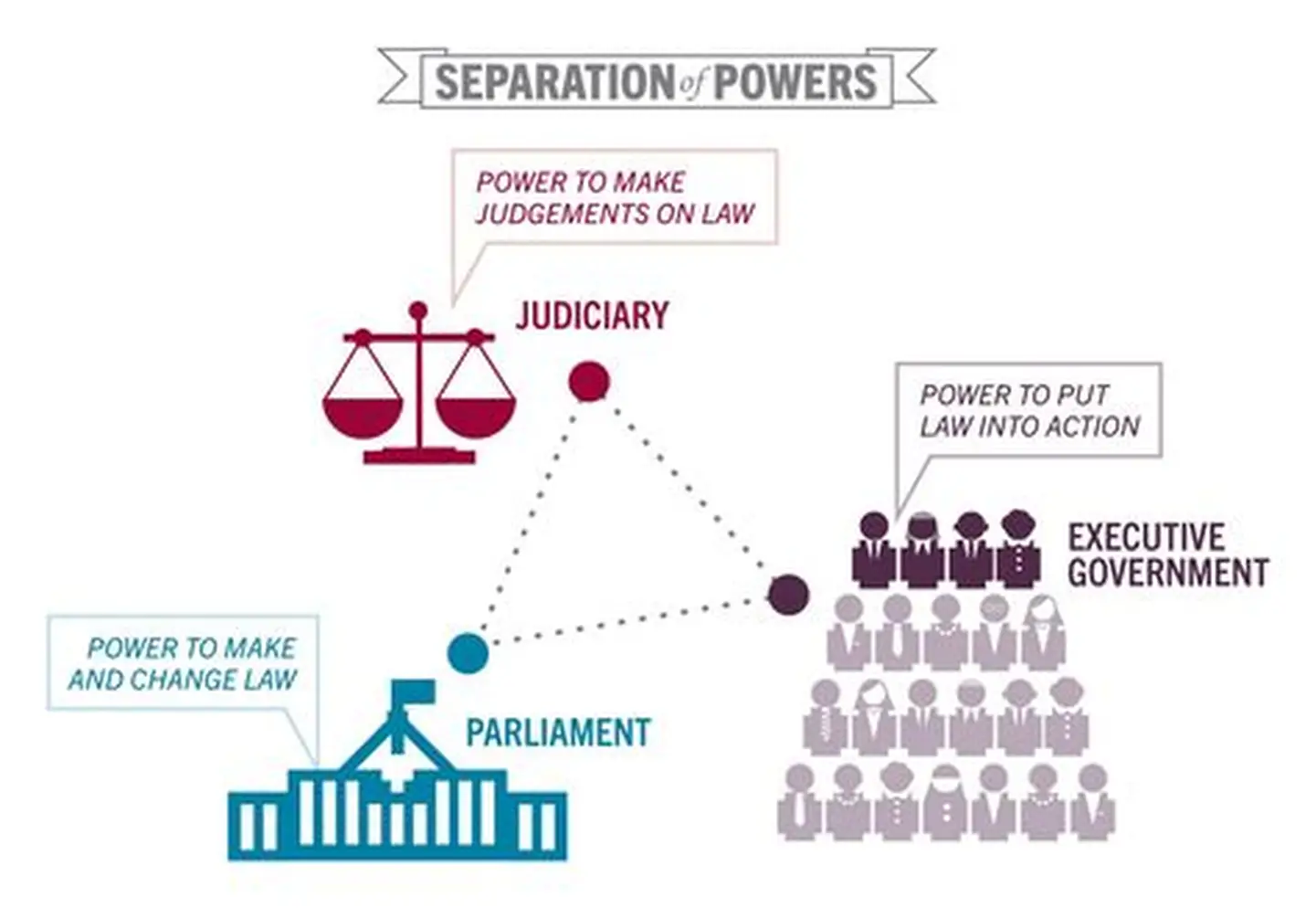
The Police are empowered to investigate crimes, but they are not vested with unfettered authority to deprive citizens of access to their funds without due process of law. Due process of law is that the police must approach a court of law to seek an order restricting, blocking, freezing, or dealing with any property that is not the property of the Police, including bank accounts. Like the Igbo saying captures it: “ekere oru eke” (there is division of labour); by rule of law, the police cannot do the work of the courts.
The courts have repeatedly emphasised that restrictions on a person’s property rights, including funds in a bank account, should comply with constitutional safeguards and applicable laws. I love the way the Supreme Court emphasised it in BOSE OLAGUNJU v. ECONOMIC AND FINANCIAL CRIME COMMISSION (2019) LPELR-48461(CA), that:
“No such unbridled right is ever given in a truly democratic society where constitutionalism is in vogue. As no such ex parte Order was sought and obtained before clamping down on a citizens finances, that exercise is a nullity. The EFCC is and should be a useful watchdog and not a monster out to devour or intimidate people.”
- Nigerian Banks and Fear of Law Enforcement Agencies are “5 and 6”.
Over the years, handling such bank cases, I am impressed to agree with my colleague, Darlington, that Nigerian banks are too scared of law enforcement agencies. However, it may be better to say “bank staff,” since only uninformed bank staff will be so scared of law enforcement agencies that they gladly violate customers’ fundamental rights and cause the bank huge financial losses in court costs. The Court of Appeal (Abubakar, JCA) has warned banks and their staff in GTB PLC V. ADEDAMOLA [2019] 5 NWLR (PT. 1664) 30 AT 43,, that;
“Before freezing customer’s account or placing any form of restraint on any bank account, the bank must be satisfied that there is an order of court. By the provisions of Section 34(1) of the Economic and Financial Crimes Commission Act, 2004, the Economic and Financial Crimes Commission has no power to give direct instructions to banks to freeze the account of a customer without an order of court, so doing constitutes a flagrant disregard and violation of the rights of a customer.”
In that same case, the Court also held that:
“The Economic and Financial Crimes Commission has no powers to give direct instructions to Bank to freeze the Account of a Customer, without an order of Court, so doing constitutes a flagrant disregard and violation of the rights of a Customer. I must add that, the judiciary has the onerous duty of preserving and protecting the rule of law, the principles of rule of law are that, both the governor and the governed are subject to rule of law. The Courts must rise to the occasion speak and frown against arrogant display of powers by an arm of Government. It is in the interest of both Government and citizens that laws are respected, as respect for the rule of rule promotes order, peace and decency in all societies, we are not an exception. Our Financial institutions must not be complacent and appear toothless in the face of brazen and reckless violence to the rights of their customers. Whenever there is a specific provision regulating the procedure of doing a particular act, that procedure must be followed.”
Per TIJJANI ABUBAKAR ,JCA (Pp. 24, paras. A-F)
The Constitution of the Federal Republic of Nigeria guarantees the right to own and enjoy property and requires that any interference with such rights be carried out in accordance with the law. Accordingly, where an account is frozen without lawful authority or without compliance with statutory and constitutional requirements, the affected customer may challenge the action in court and seek appropriate remedies, including damages (financial cost) against the law enforcement agency and the bank.
There are circumstances under applicable laws in which investigative agencies may approach a court and obtain orders authorising the restriction, preservation, attachment, or freezing of funds suspected of being connected with criminal activities. Once a valid court order is obtained, banks are legally obliged to comply with such orders.
- What to Do If Your Account Is Unlawfully Frozen
If you discover your account has been blocked without a valid judicial order, you have clear legal remedies:
- Demand the Basis: Instruct your lawyer to formally write to your bank demanding the specific regulatory instrument or the certified true copy (CTC) of the Court Order backing the restriction.
- Enforce Fundamental Rights: If your account was blocked by EFCC using its “72-hour Stop Order” and the 72-hour window has expired, and no court order exists, you can file a lawsuit against both the bank and the law enforcement agency for a flagrant violation of your constitutional right to property and fair hearing.
- Claim Substantial Damages: Nigerian courts regularly award millions of Naira in general and special damages to account holders to compensate for the economic hardship, business losses, and reputational damage caused by illegal account restrictions.
4. Conclusion:
The rule of law demands that even criminal investigations be conducted within the boundaries established by the Constitution and other applicable laws. While law enforcement agencies have a duty to combat crime, citizens equally have a right to due process and protection from unlawful interference with their property.
Therefore, the answer to the question is that neither the Police nor the EFCC should arbitrarily freeze a person’s bank account merely by issuing directives unsupported by law. Where the law requires judicial authorization, a court order should be obtained. Any person whose account has been frozen should promptly ascertain the legal basis for the restriction and seek legal advice where necessary.
The freezing of a bank account is a serious interference with a person’s property rights and must be supported by lawful authority and due process. Victims are advised to contact their lawyers.
Onyekachi Umah, FCIArb (UK)
Managing Partner, SabiLaw Firm
+234 803 766 5878

SabiLaw Firm
Legal, Arbitration and Notarial Services
+234 813 432 4743
References:
- Section 44 (1), 318 and 319 of the Constitution of the Federal Republic of Nigeria, 1999.
- Section 7(6) of the Money Laundering (Prevention and Prohibition) Act.
- Section 34(1) of the Economic and Financial Crimes Commission (Establishment) Act.
- BOSE OLAGUNJU v. ECONOMIC AND FINANCIAL CRIME COMMISSION (2019) LPELR-48461(CA)
- GTB PLC V. ADEDAMOLA [2019] 5 NWLR (PT. 1664) 30 AT 43
- Onyekachi Umah, “Legality of the “EFCC Order” on Bank Employees Declaration of Assets” (ThisDay, 6 April 2021) <https://www.thisdaylive.com/index.php/2021/04/06/legality-of-the-efcc-order-on-bank-employees-declaration-of-assets/amp/> accessed 7 April 2021.
- Onyekachi Umah, “The Minimum Financial Threshold for EFCC Cases.” (LearnNigerianLaws.com, 1 September 2020) <https://sabilaw.org/the-minimum-financial-threshold-for-efcc-cases/> accessed 16 July 2021
- Onyekachi Umah, “The Central Bank of Nigeria Notices on Cryptocurrencies; a Ban or a Banger?” (LearnNigerianLaws.com, 9 February 2021) <https://sabilaw.org/the-central-bank-of-nigeria-notices-on-cryptocurrencies-a-ban-or-a-banger/> accessed 17 February 2021
- Onyekachi Umah, “Unlawfulness of the EFCC Order on Bankers Declaration of Assets” (LearnNigerianLaws.com, 8 April 2021) <https://sabilaw.org/unlawfulness-of-the-efcc-order-on-bankers-declaration-of-assets/> accessed 12 April 2021
- Onyekachi Umah, “Debunking Myths Relating to Bankers Declaration of Assets Law” (LearnNigerianLaws.com, 12 April 2021) <https://sabilaw.org/debunking-myths-relating-to-bankers-declaration-of-assets-law/> accessed 20 April 2021
- Onyekachi Umah, “Nigerians That Are Prohibited From Having Foreign Bank Accounts” (LearnNigerianLaws.com, 25 November 2020) <https://sabilaw.org/nigerians-that-are-prohibited-from-having-foreign-bank-accounts/> accessed 16 July 2021
- Onyekachi Umah, “The Supreme Court Has Warned Efcc And Police Against Recovering Debts And Investigating Disputes From Civil Transactions.” (LearnNigerianLaws.com, 26 October 2019) <https://sabilaw.org/the-supreme-court-has-warned-efcc-and-police-against-recovering-debts-and-investigating-disputes-from-civil-transactions-daily-law-tips-tip-444-by-onyekachi-umah-esq-llm-aciarb-uk/> accessed 16 July 2021
SabiLaw Solutions:
👩🎓Take short certificate courses and training at SabiLaw Academy; www.Academy.SabiLaw.org
🛒 Download templates, samples, forms and precedents at SabiTemplates; Templates.SabiLaw.org
💻 Access Nigerian laws, court judgments, regulations, bye-laws and reports at SabiLaw; www.SabiLaw.org
👨⚖️ For Legal Services, Arbitration Services or Notary Public Services, at SabiLaw Firm; www.LawFirm.SabiLaw.org
🎯 Publish and publicise your legal articles and materials for FREE on SabiLaw by sending them to: [email protected]
💼 Partner for legal awareness and advocacy projects in your programs with SabiLaw Foundation: www.Foundation.SabiLaw.org
🎁 Receive our free Daily Law Tips & other publications via our WhatsApp group: Daily Law Tips Group 5 and Telegram Channel: SabiLawGroup
For Legal Consultancy/Engagements, Arbitration Services or Notary Public Services, contact SabiLaw Firm (formerly, Bezaleel Chambers International) at [email protected] or Call/WhatsApp: +234 813 432 4743.
For Individual/Corporate Training, Legal Templates, Daily Law Tips, Institutional Solutions, and Partnerships, contact SabiLaw at lisa@SabiLaw.org or Call/WhatsApp: +234 9155194001.
For free publication of your articles and materials on SabiLaw, contact SabiLaw at [email protected] or Call/WhatsApp: +234 9155194001.
****************************************************************************
This work is published under the free legal awareness project of Sabi Law Foundation (www.SabiLaw.org) funded by SabiLaw Firm (formerly, Bezaleel Chambers International) (www.LawFirm.SabiLaw.org). The writer was not paid or charged any publishing fee. You too can support the legal awareness projects and programs of Sabi Law Foundation by donating to us. Donate here and get our unique appreciation certificate or memento.
DISCLAIMER:
This publication is not a piece of legal advice. The opinion expressed in this publication is that of the author(s) and not necessarily the opinion of our organisation, staff and partners.
SOLUTIONS:
👩🎓Take short certificate courses and training at SabiLaw Academy; www.Academy.SabiLaw.org
🛒 Download templates, samples, forms and precedents at SabiTemplates; Templates.SabiLaw.org
💻 Access Nigerian laws, court judgments, regulations, bye-laws and reports at SabiLaw; www.SabiLaw.org
👨⚖️ For Legal Services, Arbitration Services or Notary Public Services, at SabiLaw Firm; www.LawFirm.SabiLaw.org
🎯 Publish and publicise your legal articles and materials for FREE on SabiLaw by sending them to: [email protected]
💼 Partner for legal awareness and advocacy projects in your programs with SabiLaw Foundation: www.Foundation.SabiLaw.org
🎁 Receive our free Daily Law Tips & other publications via our WhatsApp group: Daily Law Tips Group 5 and Telegram Channel: SabiLawGroup
KEEP IN TOUCH:
Get updates on all the free legal awareness projects of Sabi Law (#SabiLaw) and its partners, via:
YouTube: SabiLaw
X (Twitter): @Sabi_Law
Facebook page: SabiLaw
Instagram: @SabiLaw.org_
WhatsApp Group: Free Daily Law Tips Group 5
Telegram Channel: SabiLawGroup
Facebook group: SabiLaw
Email: [email protected]
Website: www.SabiLaw.org
ABOUT US & OUR PARTNERS:
This publication is the initiative of the Sabi Law Foundation (www.Foudation.SabiLaw.org) funded by the SabiLaw Firm (formerly, Bezaleel Chambers International) (www.LawFirm.SabiLaw.org). Sabi Law Foundation is a Not-For-Profit and Non-Governmental Legal Awareness and Advocacy Organization based in Nigeria. It is the first of its kind and has been promoting free legal awareness since 2010.
DONATION & SPONSORSHIP:
As a registered not-for-profit and non-governmental organisation, Sabi Law Foundation relies on donations and sponsorships to promote free legal awareness across Nigeria and the world. With a vast following across the globe, your donations will help us increase legal awareness, improve access to justice, and prevent and reduce common legal disputes and crimes in Nigeria. Make your donations to us HERE or contact us for sponsorship and partnership, via: [email protected] or +234 9155194001.
*****************************************************************************