

The Tragedies, Comedies and Ironies of Ouster Clauses and Like Provisions in Nigerian Constitutions.
By G. Festus Oguichen
ABSTRACT
What is the use of making a law that cannot be subject to judicial pronouncement and interpretation? The courts are constitutionally empowered to determine issues between persons and authorities, uphold the rights of citizens and review the acts of other organs of government. However, the said power is sometimes stolen back by the legislature true the instrumentality of ouster clause and like provisions in a statute. Using the doctrinal approach, this work critically examines the effect of ouster clause and similar provisions under the military enactments and the under the 1999 Constitution of the Federal Republic of Nigeria by considering a few relevant provisions of military enactments and the 1999 constitution. It argued that inclusion of ouster clause or similar provisions in an enactment amounts to legislative excesses; and often result in absurdities, inconsistencies and legislative futility, lead to lack of accountability on the part of the government; and bring about undesirable outcome or consequences. It is recommended among other things, statutory review and enjoined the court to always maintain that the ouster clauses and like provisions in a statute are not sacrosanct and complete bar to the court’s jurisdiction when the constitution is viewed holistically.
Keyword: constitution, court, legislature, ouster clause
INTRODUCTION
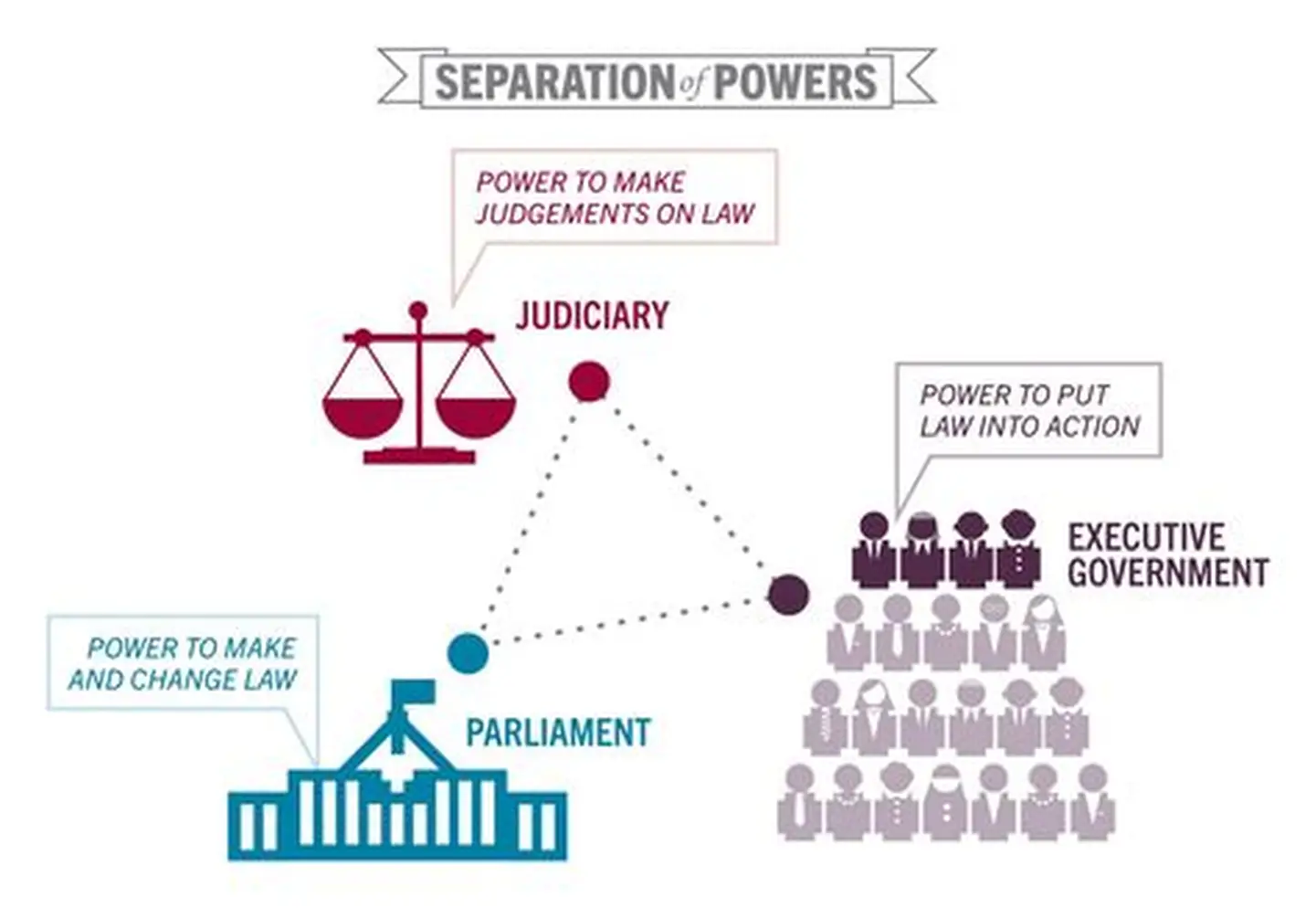
Ouster clause is inimical to the doctrine of separation of power, rule of law, and democracy. It is a clog on the wheel of justice and a subtle tool for the usurpation of judicial powers by the legislature .in country govern by law and which operate the doctrine of separation of powers, all issues and matters ought to be subject to the jurisdiction of the court. It does not lie within the power of the legislature to pick and choose which matter the court can or can not inquire into. An ouster clause is a clause in the provision of a statute that oust. It is most frequently used in relation to the jurisdiction of courts.[1] That is, it a provision in a statute that oust the jurisdiction of the court. It is a means by which the legislature deprives the court of the power to adjudicate over a particular issue and preclude the citizens from complaining or questioning the validity of its laws or an act. Besides ouster clauses, there are other provisions in our statutes which are not ouster clauses per se but are similar to ouster clause in that they have the same effect of taking a particular matter out of the jurisdiction of the court.
Several statutes are replete with Ouster clauses and like provisions in Nigeria. However, the present work focuses on ouster clause and like provisions contained in some military enactments during the military era and those under the 1999 Constitution. the issue of whether including an ouster clause in an enactment is not ultra vires the power of the legislature is not specifically delved into. The writer contends that the effect of ouster clause contained in military enactments and the 1999 constitutions is tragic, humorous and ironical in some instances; demonstrate inconsistencies and disagreement in any section, part or chapter of a statute containing it, contradicts other parts of the constitution , often defeat the purpose and utility of such law containing it; negates the doctrine of the separation of power and democracy. The work contributes to the few existing literature by revealing the downside, dangers and the mischiefs of ouster clause and like provisions under the military enactments and the 1999 constitution.
Ouster clause provisions in the military constitution – it’s tragedies, comedies and ironies
The military constitution is found in a special legislation called “Decree” and “Edict” at the federal and regional level respectively. According to the military, they always strike to take over power in order to salvage the nation from selfish and corrupt politicians and to right their wrong. No wonder when the military took over power, after its first coup in 1966, by virtue of Section 3(I) of the Decree No. 1 1966,[2] it promised to make law for the peace, order and good governance of Nigeria. Another interesting thing was that the section of the Constitution of The Federal Republic Nigeria 1963, which provided for the judiciary was not suspended but was saved and preserved.
However, The above promise to make law for the peace, order, and governance; and to allow the continuous functioning of the Judiciary was made an irony in appearance and effect because of ouster clause provision in Section.6 of the Decree.[3] It provided that ‘no court of law shall have the power to entertain any question as to the validity of any Decree or Edict’. If the judiciary which the regime purported to preserve was for-closed from entertaining question as to the validity of any Decree or Edict, what then could have been the function of the judiciary under that regime? Consequently, the Decree attempted to make the judiciary a toothless bulldog and a mere toy. What an irony! What a tragedy?
Again, the tragedies, ironies and comedies of ouster clause provisions under the military enactments spotlighted in the celebrated but controversial case of E.O Lakanmi & Anor. V. The Attorney General (Western State).[4] A brief fact of the case is set out here for clarity purpose. In that caswerethe asset of some public servants including the appellants was investigated by a Tribunal of Inquiry pursuant to Edict No. 5 of 1967 (of the Western State). The Tribunal made an order prohibiting the appellants or their agents from dealing with their properties.
Also, the appellants were not to operate their bank accounts by means of withdrawal under the same condition. The appellants dissatisfied with this, made an application to the Western State High Court for the purpose of having the order quashed. But the trial Judge dismissed the application holding that the was not ultra vires and could not be challenged due to ouster clause provisions in the Edict. Thus, the appellants appealed to the Western State Court of Appeal. While the appeal was pending, the Federal military Government promulgated three successive Decrees[5] to aid the Western State Government as it was apparent on the face of the grounds of appeal that the respondent (Western State Government ) is bound to run into some legal difficulty. Section 14(2)(b) and section 14(1) 2 (1) and 2(2) of Decrees. No. 37 and 45 respectively were the pith and meat of the matter. These sections validated the order of the tribunal which confiscated the properties of the appellants and excluded the application of the fundamental rights provisions.
At this point, the court would have been the appellants resort, but the Decrees went further to oust the jurisdiction of the court. It also contained retroactive ouster clause by abating (suspending) all pending proceedings in respect of any matter contemplated by the Decrees. The effect of this is that the court has been ousted from entertaining the appellant’s case. Imagine the extent to which the Military which claimed they struck to save and deliver the citizens from the Political demagogue used the instrumentality of ouster clause to make the citizen face such a quagmire and untold hardship. What an irony and a tragedy! The military purported to allow the continuous functioning of the Judiciary but in the present case and several other situations the military had used ouster clause provisions to snatch back the power from the judiciary, especially, when the intervention of the judiciary is badly needed.
The ouster clause provision churned out when the legal order changed in 1983 were eyesore. The Judiciary was difunctionalised and rendered useless. It is not in over statement to say that Judiciary under the military can be likened to a father who saw his son fell into a lake and started drowning but was prevented by ouster clauses not to save his son. What a tragedy, comedy and irony! One of such obnoxious Decree is Decree No. 2 of 1984[6] . no other law had profound impact on the state of rule law in Nigeria during the military rule than Decree No.2 of 1984.[7] The Decree gave the military regime the power to detain persons who where threats to national security for specified periods of time and ousted the jurisdiction of the courts to determine the legality or otherwise of such detention. Using the Decree the military Governments caused several persons to be detained for indefinite periods of time.[8]
OUSTER CLAUSE AND LIKE PROVISIONS IN THE CIVILIAN CONSTITUTION (1999) ITS TRAGEDIES, COMEDIES AND IRONIES
The 1999 Constitution was given by the military for a civilian democratic regime thus, a Civilian constitution. Despite that it is a civilian constitution made for a democratic regime, it has not been exculpated from its military features in that it is still clustered with ouster clauses and similar provisions. The first irony of in the constitution is that the constitution just like the 1979 constitution prohibits the legislature from making law which ousts the jurisdiction of the court.[9] Notwithstanding, the constitution purports to oust the jurisdiction of the courts on important issues some of which are considered hereunder:
Impeachment of President, Vice President, Governor and Deputy Governor
Sections 143 and 188 of the 1999 constitution provide for the removal or impeachment of the president/vice president and the Governor/Deputy Governor respectively. For clarity the summary of the procedures for the impeachment is set out here using the procedures for the removal of Governor/Deputy Governor as a case study.
The procedure is set in motion when a notice of any allegation of gross misconduct which is in writing and signed by not less than one third of the members is presented to the speaker of the house who shall within seven days of the receipt of such notice cause same to be served on the holder of the office. Where the holder of the office made a reply, the Speaker shall cause the reply to be served on the members of the Assembly. However, whether the holder of the office made a reply or not, within 14 days of the presentation of the notice the Speaker, the house shall resolve by motion supported by vote of not less than two thirds majority of all the members whether or not they will investigate the allegation. After the resolution had been made, the chief judge of the state shall at the request of the Speaker, appoint a seven-man panel to investigate the allegation. The panel shall within the three months of its appointment report its findings to the House of Assembly. The decision of the panel is the key to the removal or otherwise of the holder of the office. Where the panel report is that the allegation had not been proved, that is the end of the matter. On the other hand, where the report of the panel is that the allegation had been proved and by a resolution of the House supported by not less than two-thirds majority of all its members adopts the report of the panel, the holder of the office (Governor or deputy Governor Stands removed from the date of the adoption of such report.
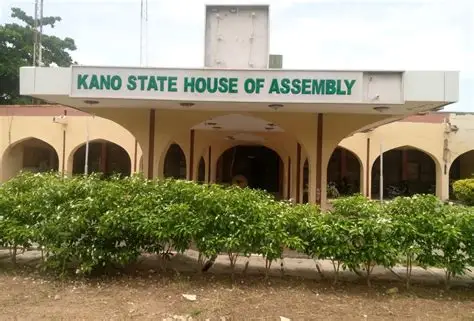
Subsection 10 of section 188 is important to this discussion. By virtue of that subsection, matter bordering on the proceedings or determination of the panel of seven or the House of Assembly shall not be entertained or questioned in any court. One may wonder what could have been the intention of the framers of the 1999 constitution to have ousted the court from entertaining a relevant issue as this since abuse of the process is inevitable. It is sad! In fact, impeachment by the legislature in Nigeria had always been mired with irregularities and had been always used in vexatious, frivolous and malicious manner. Imagine what will be the harrowing experience which a person impeached through the usual political impeachment where the court declines jurisdiction on the ground of the ouster clause as the court did in the case of Balarabe Musa.[10] Also, the plaintiff’s case in chief Enyi Abaribe v The speaker, Abia State House of Assembly and ors,[11] suffers set back as a result of the ouster clause in section 188(10) which the court of Appeal gave effect to. It is submitted that the view of the court in Inakoju v Adeleke,[12] is commendable. The court that case was of the view that outer provision in subsection 10 can only be invoked where the procedures outlined in subsection 1-9 is complied with
Criminal proceedings instituted by the Attorney General or any other Person
Sections 174 and 211 of the Grund norm unequivocally stated the power of the Attorney-General of the federation and the state in respect to criminal proceedings respectively. By subsection (1)(c) of the section the Attorney-is empowered to discontinue a criminal proceeding undertaken by him or any other person or authority before judgment is delivered. Although it may be argued that the provision is not an ouster clause per se, it appears to be one of the most obnoxious provisions in the 1999 constitution which if strictly applied, may have terrible effect than ouster clauses. Indeed, it can be regarded as a terminatory ouster clause in disguise.
Subsection 3 the section requires the Attorney-General to have regard to the interest of the public, interest of the justice and the need to prevent abuse of legal process in excising the power. One would have taken solace in this subsection but the court’s interpretation that the section does not creates a condition but rather it is a permissive language had left much to be desired.
The section received judicial pronouncement under the 1979 constitution[13] in the case of State v S.A. Ilori and Ors.[14] The summary of the case was that after the charge contained in the information filed against the appellant (one Fred Egbe) in Lagos State High, was quashed the appellant wrote to the Attorney-General of to prosecute the respondents who are the investigating police officers and the Director of Public Prosecution wherein he requested for the prosecution of the respondents for the offences of conspiracy to bring false accusations against the appellant, contrary to Section.125 of the Criminal Code (Cap. 31) Laws of Lagos State and conspiracy to injure the appellant in his trade or profession by maliciously procuring the seizure and detention of the properties of his clients contrary to Section 518(4) of the Criminal Code. The Attorney-General of Lagos State, declined to accede to the request of the appellant. The appellant still determined to make the respondents face criminal resorted to private prosecution of the respondents. But the Attorney-General did not also want the respondents to face the trail which he considered unwarranted and unjustifiable. Hence, he invoked section 191(1)(c) of the 1979 Constitution and entered a nolle prosequi for the discontinuance of the trail.
Can it be said that the Attorney General decision was guided by public interest, the need to achieve justice or prevent abuse of legal process? The answer is blowing in the wings. However, it can be said that the provision is unfortunate in that it has placed the attorney General a mere government appointee above the court’s jurisdiction. Instituting criminal proceedings in Nigeria is always cumbersome and demanding. Under this provision, the same Attorney-General who is charged with instituting criminal proceedings for the state can unchallengeably oust the requisite jurisdiction of the court to entertain a particular matter. that is, the attorney-general is both a builder and a destroyer, What an Irony! imagine where a proceeding is instituted by private individual by fiat, the attorney-general can just come like a deus ex-machiner or bolt from the blue to terminate such proceedings, what a comedy.
Civil and Criminal proceedings Against The occupiers of the office of the President, Vice President, Governor And Deputy Governor
By the combined provision of section 308(1)(a)-(c)and (3) of the Constitution of the Federal Republic of Nigeria there is absolute restriction on instituting or continuing a civil or criminal proceedings, arresting or imprisonment or applying or issuing any process of court on the incumbent of the office of the president, vice president, Governor and Deputy Governor while in office. That is, no civil or criminal proceedings can be brought against the holders of the above offices in their personal capacity during their period of office. This simply refers to as immunity.
Some will also posit that the provision is not an ouster per se but it has the same effect of baring the court from entertaining any matter relating to any issue thereto. In giving effect to the provision, the court in the case of Tinubu v. I.M.B. Securities Plc. (2001) 16 NWLR (Pt. 740) 670 at 697 paras A-B posed thus: All courts are bound in appropriate cases to give effect to the immunity prescribed under section 308(1) of the 1999 Constitution during the period of office of the holder of any of the posts prescribed under section 308(3) of the 1999 Constitution and it would not matter whether or not such immunity is pleaded or relied on by the parties to any proceedings.
From the above statement the section is even overreaching than some ouster clauses per se. This because, once an action is brought against holder of the named offices even where non of the parties pleaded or relies upon the provision, the court can rely on it Suo moto and strike out the any matter brought against holder of the relevant office.
The effect of the immunity is to make the holder of those offices not amenable to the jurisdiction of the court in respect of their wrongs while in office. To put it naked, the provision is simply saying the that the beneficiaries of the provision can do whatever they like against the ordinary citizens or others while in office and nothing can be done about it. What a tragedy. There can be no any argument to justify the immunity in view of Nigerian shrinking democracy and in the face of its crooked, nefarious and corrupt leaders. Nigeria is not yet mature and ripe to have leaders who can not be personally subjected to the jurisdiction of the court.
Another problem with the immunity clause is abuse. For instance, Immunity from prosecution is subject to abuses; just as every other law or rule is subject to abuse and adulteration by persons with such disposition to manipulate and corrupt laws and rules for their personal benefit, instead of public benefit. It is the case, therefore, that a governor or president, desirous of subverting public interests and public good for evil and personal gain, could engage in actions that serve personal or parochial interests, which of course amounts to perversions of public and national interest. At the same time, such governor may seek to cloak himself in immunity from prosecution for actions undertaken as a public official. The electorate has witnessed repeat demonstrations of such abuse of immunity protections since 1999. It is a well-known fact that corruption and abuse of power by past and present members of the executive and other arms of government have retarded development and progress in our country. The immunity clause in our Constitution is and has been an impediment in the war against corruption. The call for its removal pivots around the belief by a majority of the citizenry that for Nigeria to move forward in her fight against corruption, the immunity clause needs to be amended or removed altogether.[15]
Issue relating to fundamental Objectives and directive Principles of State Policy
Another Blood sucking , anti progress and accountability ouster clause in the 1999 constitution is that contained in section 6(6)(c). Section 6(6)(b) of the constitution empowers the judiciary to determine matter between persons, government or authority. Also, section 13 empowers the three (3) arms of government i.e. the judiciary inclusive to ensure the conformity with, observation and application of the provision of chapter 2 of the Constitution which deals fundamental objectives and directive principle of state policy. Contrastively, Section 6(6)(c) takes back the power given to judiciary in section 13 to ensure conformity, observation and application of the chapter. What an irony and contradiction? This is like a gift of the devil, what a tragedy! Again, the word shall have been used many times in chapter two of the constitution, and it connotes mandatory compliance in view of its repeated usage. But the mandatoriness has been made optional as a result of the ouster provision, what an irony!
On top of that, chapter two of the 1999 constitution is the most beautiful chapter of the 1999 constitution. Nigeria would have been a heaven on earth, and the government would have been more focus and accountable if it were justiciable. Unfortunately, the provision is humoristic and laughable as it makes ridicule of the rule of law, separation of power, reveal our legislative absurdities and even bereft the chapter of its usefulness or importance and give citizens false and baseless hope. What a tragedy, comedy and irony!
RECOMMENDATIONS
After considering the effect and problems of outer clause provision under the military enactments and the 1999 constitution, the author recommends as follows:
To avoid draconian ouster clauses usually obtainable under the military, all loopholes which may necessitate the incursion of military rule in Nigeria must be blocked to avoid the emergence of military rule and its obnoxious and retrospective ouster clauses. One of the major ways to prevent another emergence of military rule is for our so-called civilian leaders to provide good and quality leadership, promote and foster the democratic tenets.
The provisions dealing with absolute immunity for president, vice president, Governor and Deputy governor should be removed because it has done more harm than good. Nigeria is not yet mature or ripe to provide for absolute executive immunity for an organ of government which already wields much power influence over the other organs of government. Hence, it recommended that the position in developed democracy like the U.S where the president does not have immunity in respect of criminal matters and matters which does not relate to his official act should be adopted.
Again, a better way of solving a legal problem is by statutory review or amendment. It is suggested that some of the relevant provisions disused herein should be amended since, from all indications our politicians are not ready to make a new constitution for the country. Provision empowering the Attorney-General to unilaterally discontinue a criminal proceeding should be discarded. Also, the power to prosecute criminal cases should not revolve around the attorney – general as it were but should also extended. Private law firms should be empowered to prosecute criminal cases after meeting some stipulated conditions. It is these law firms that will be instrumental in prosecution cases involving the political office holders since the attorney- general being a government appointee cannot be reasonably expected to do so.
All things considered, it may not be wrong to say that the non justiciability of chapter 2 of the 1999 constitution is an imitation of Article 37 of the Indian constitution. The provision has been made justiciable by the courts in India. Therefore, Nigerian court should also imitate same attitude toward all ouster clause and like provisions in the 1999 constitution and should always insist that the provisions are not sacrosanct as in the case of Centre for Oil Pollution Watch v. N.N.P.C. (2019) 5 NWLR (Pt. 1666) 518, where Nweze JSC, observed: “ In my humble view, the non-justiciability of section 6 of the Constitution is neither total nor sacrosanct as the subsection provides a leeway by the use of the words ‘except as otherwise provided by this Constitution’. This means that if the Constitution otherwise provides in another section, which makes a section or sections of Chapter II justiciable, it will be so interpreted by the courts. Federal Republic of Nigeria v. Anache: In Re Chief Olafisoye (supra) 659;italics supplied.The implication of this authoritative pronouncement is that the proper approach to the interpretation of the said chapter should be by the mutual conflation of other provisions of the Constitution with the provisions of chapter11.This is so because “if the Constitution provides otherwise in another section, which makes a section or sections of Chapter II justiciable, it will be interpreted by the courts”
Above all, to achieve all the recommendations judicial independence must be maintained and guaranteed.
CONCLUSION
The paper examines the effect and problems of ouster clauses and similar provisions under the Nigeran military and civilian constitutions. It found that ouster clauses and like provisions baring court from entertaining a particular matter are enemies of democracy, separation of power, growth and development, serves a shield from accountability by political leaders and in appropriate cases acts as clog to the wheel of justice , subjugate citizens to untold hardship or result in legislative absurdities and futility. It submitted that Nigeria’s dream of becoming a prosperous, developed and true democratic nation will remain a dream if relevant provision of the 1999 constitution examined in this work are not reviewed.
ENDNOTES
[1] Abaribe v. Abia State House of Assembly (2002)14 NWLR(pt.788) 466 at 502
[2] Constitutiion (suspension and Modification Decree) 1966
[3] Decree No 1 of 1966 (Constitution Suspension and Modification Decree)
[4] [1971] UILR 201
[5] Investigation of Assets[Public officers And Other persons [Amendment Decree]] Decree No. 43 of 1968; Forfeiture of Assets etc. [Validation] Decree No. 45 of 1968; Investigation of Assets [public Officers and other Persons] Decree No. 37 of 1968.
[6]( state Security Detention of persons) Decree
[7] N.A.Inegedion and J.O. Odion, Constitutional Law In Nigeria (2nd Edn Ambik Press 2011)
[8] Ibid see Secton 4(8) of the constitution
[10] Balarabe Musa v Speaker kaduna State House of Housembly [1971]1 KDNH
[11] [20002] 14 NWLR (Pt.8280) 307
[12] [2007] 4 NWLR (Pt.1025) 498
[13] Then it was section 191(1) which the in pari materia with the now section 174 and 211(1)
[14] [1983] SCNJLR
[15] Ibraheem Ojo Tajudeen, Executive Immunity in Nigeria: Putting Off Old Garments , Journal of Politics and Law; Vol. 6, No. 3; 2013, online available at URL: http://dx.doi.org/10.5539/jpl.v6n3p189 , accessed on 21st August 2021.
****************************************************************************************
This work is published under the free legal awareness project of Sabi Law Foundation (www.SabiLaw.org) funded by the law firm of Bezaleel Chambers International (www.BezaleelChambers.com). The writer was not paid or charged any publishing fee. You too can support the legal awareness projects and programs of Sabi Law Foundation by donating to us. Donate here and get our unique appreciation certificate or memento.
DISCLAIMER:
This publication is not a piece of legal advice. The opinion expressed in this publication is that of the author(s) and not necessarily the opinion of our organisation, staff and partners.
PROJECTS:
🛒 Take short courses, get samples/precedents and learn your rights at www.SabiLaw.org
🎯 Publish your legal articles for FREE by sending to: [email protected]
🎁 Receive our free Daily Law Tips & other publications via our website and social media accounts or join our free whatsapp group: Daily Law Tips Group 6
KEEP IN TOUCH:
Get updates on all the free legal awareness projects of Sabi Law (#SabiLaw) and its partners, via:
YouTube: SabiLaw
Twitter: @Sabi_Law
Facebook page: SabiLaw
Instagram: @SabiLaw.org_
WhatsApp Group: Free Daily Law Tips Group 6
Telegram Group: Free Daily Law Tips Group
Facebook group: SabiLaw
Email: [email protected]
Website: www.SabiLaw.org
ABOUT US & OUR PARTNERS:
This publication is the initiative of the Sabi Law Foundation (www.SabiLaw.org) funded by the law firm of Bezaleel Chambers International (www.BezaleelChambers.com). Sabi Law Foundation is a Not-For-Profit and Non-Governmental Legal Awareness Organization based in Nigeria. It is the first of its kind and has been promoting free legal awareness since 2010.
DONATION & SPONSORSHIP:
As a registered not-for-profit and non-governmental organisation, Sabi Law Foundation relies on donations and sponsorships to promote free legal awareness across Nigeria and the world. With a vast followership across the globe, your donations will assist us to increase legal awareness, improve access to justice, reduce common legal disputes and crimes in Nigeria. Make your donations to us here or contact us for sponsorship and partnership, via: [email protected] or +234 903 913 1200.
**********************************************************************************