

Beyond the End of Production: A Critical Examination of the Nigeria Upstream Decommissioning and Abandonment Regulations, 2026.
By Zainab Alhaji Baba
Introduction
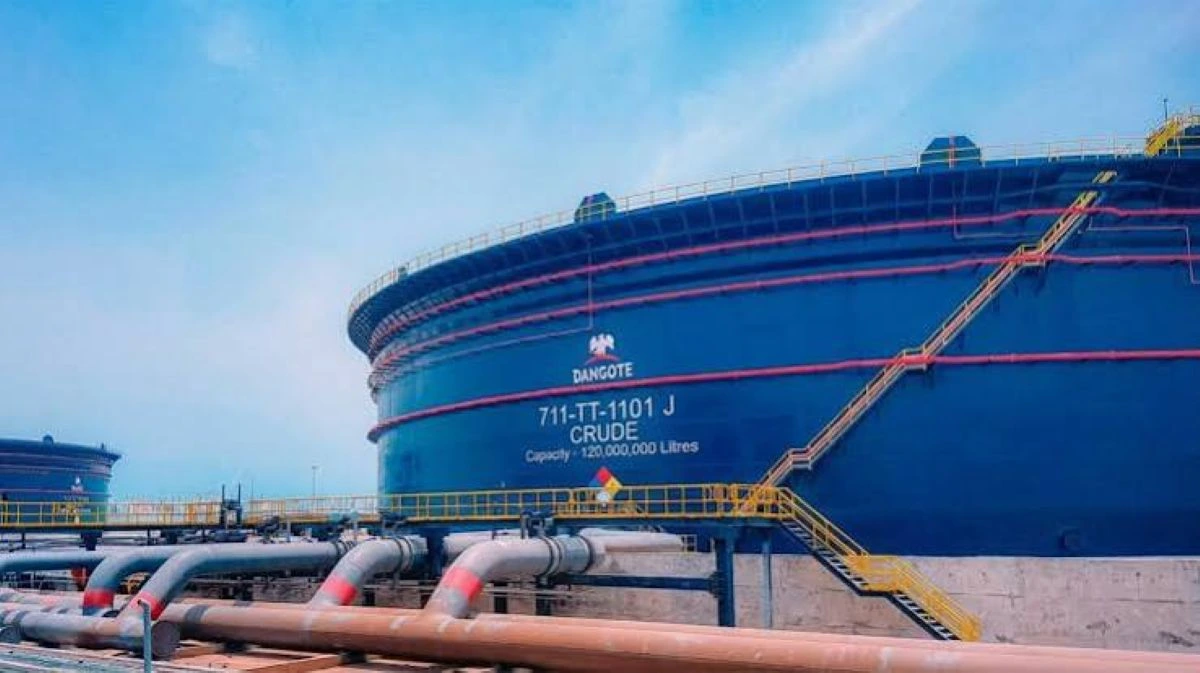
The cessation of petroleum production does not necessarily mark the end of petroleum operations. Although the productive life of a petroleum field may have come to an end, wells, pipelines, installations, structures and other facilities may remain in place, together with debris, waste materials and other remnants of petroleum operations. Their continued presence may give rise to environmental, safety and financial risks, particularly where such assets are inadequately secured, removed or remediated. For operators, the end of production may therefore mark not the end of their responsibilities, but the commencement of a distinct set of obligations associated with the closure and management of petroleum assets.
Decommissioning and abandonment form an essential part of this end-of-life phase. Decommissioning primarily addresses the process of bringing petroleum facilities and infrastructure to an appropriate end-of-life state, which may involve their shutdown, removal, dismantling, disposal or, where permitted, partial removal and continued monitoring. Abandonment, on the other hand, relates specifically to the permanent plugging and abandonment of petroleum wells. Where these obligations are inadequately planned or executed, disused facilities, wells and associated debris may create significant environmental and safety risks, while leaving operators and, ultimately, the State exposed to substantial financial and remediation liabilities.
Against this background, the Upstream Petroleum Decommissioning and Abandonment Regulations 2026 (the 2026 Regulations) represent a commendable development in Nigeria’s upstream petroleum regulatory framework, particularly in their stronger emphasis on environmental protection, secured funding, stakeholder engagement and accountability for end-of-life petroleum operations. Nevertheless, a more comprehensive regulatory framework does not necessarily eliminate the practical and legal questions that may arise in its implementation. This article therefore critically examines selected provisions of the 2026 Regulations, considering both the protections and regulatory certainty they introduce and the questions that may arise in their practical application, particularly where environmental, operational, economic and regulatory considerations intersect. It argues that, although the Regulations provide a stronger framework for managing decommissioning and abandonment liabilities, certain provisions would benefit from greater clarity, objective criteria and procedural safeguards to ensure that regulatory discretion is exercised consistently and that the objectives of environmental protection are achieved without creating unnecessary uncertainty for operators and other stakeholders.
Statutory Framework
The Petroleum Industry Act 2021 (PIA) provides the statutory foundation for Nigeria’s decommissioning and abandonment regime. Sections 232 and 233 of the PIA establish the legal framework governing the decommissioning and abandonment of petroleum wells, installations, structures, utilities, plants and pipelines. Section 232 requires such activities to be conducted in accordance with good international petroleum industry practice and applicable regulatory guidelines. It also regulates the conduct, approval and enforcement of decommissioning and abandonment activities, while section 233 addresses their financial dimension by requiring licensees and lessees to establish and maintain a Decommissioning and Abandonment Fund.
The regulatory framework was subsequently developed through the Nigeria Upstream Petroleum Decommissioning and Abandonment Regulations 2023. That regime has now been replaced by the 2026 Regulations, issued by the Nigerian Upstream Petroleum Regulatory Commission (NUPRC) pursuant to sections 232 and 233 of the PIA. Regulation 25 expressly revokes the 2023 Regulations, while preserving acts done under the repealed Regulations to the extent that they are not inconsistent with the 2026 Regulations. The transition is therefore not merely a change in regulatory nomenclature. The 2026 Regulations now provide a more detailed framework for the planning, approval, stakeholder consultation, implementation, funding and enforcement of decommissioning and abandonment obligations.
Among the notable developments are the movement from a general timetable for submitting decommissioning and abandonment plans to a more project-stage approach, more detailed requirements for decommissioning programmes, extended approval timelines for offshore projects, provisions governing public consultation, and more elaborate rules concerning the establishment, custody and utilisation of decommissioning and abandonment funds. The Regulations also provide further mechanisms for regulatory intervention and enforcement, including the Commission’s ability to intervene where an operator fails to fulfil its decommissioning and abandonment obligations. Taken together, these provisions establish a more structured framework in which decommissioning and abandonment are anticipated, planned, funded and monitored throughout the lifecycle of upstream petroleum operations, rather than treated solely as obligations arising after production has ceased.
Critical Examination of Salient Provisions
The 2026 Regulations represent a significant advancement in Nigeria’s upstream decommissioning and abandonment regime, providing a more structured framework for the planning, funding and oversight of end-of-life petroleum operations. Nevertheless, a more comprehensive framework does not necessarily eliminate the legal and practical uncertainties that may arise in its application. Certain provisions, particularly when read alongside related provisions within the Regulations, warrant closer examination for the clarity, consistency and certainty they provide in practice. The following provisions therefore warrant closer examination:
- The Uncertain Allocation of Decommissioning and Abandonment (D&A) Liability upon Assignment under Regulations 17(1)(d) and 23
The framework is commendable in ensuring that an assignment does not simply extinguish decommissioning and abandonment obligations. The Regulations seek to prevent a change in ownership from becoming a means of escaping environmental liabilities. However, a significant statutory tension appears between Regulations 23 and 17(1)(d). Regulation 23 mandates that decommissioning liabilities automatically follow the property asset as an absolute package deal (“shall be deemed to be attached to the property transferred to the transferee”), whereas Regulation 17(1)(d) explicitly qualifies and limits this handoff based on the transfer contract (“on the assignee to the extent that the assignee has assumed obligations”). The regulations fail to provide a clear statutory hierarchy to answer a fundamental question: Does Regulation 23 impose the relevant D&A liability on the transferee automatically by operation of law, irrespective of the contractual allocation between the parties, or is the buyer’s liability strictly confined to the specific obligations it has expressly agreed to look after under Regulation 17(1)(d)?
This uncertainty gives rise to a second and distinct problem. Even if the two provisions are read harmoniously, Regulation 17(1)(d) does not address the fate of liabilities that fall outside the obligations assumed by the assignee. If the parties leave a liability unallocated, the agreement is silent or ambiguous, or the buyer’s D&A liability is contractually capped, the Regulations do not identify who bears the resulting shortfall. Does the liability remain with the assignor, continue to follow the asset notwithstanding the contractual limitation, or ultimately expose the State to the unpaid obligation? This creates a contractual liability vacuum, particularly where the actual cost of decommissioning crystallises years after the assignment and exceeds what the parties anticipated at the time of transfer. The real concern, therefore, is not whether D&A liability survives an assignment, but whether the Regulations provide a sufficiently certain mechanism for determining who bears that liability once the asset changes hands. The NUPRC should clarify the legal relationship between Regulations 17(1)(d) and 23, particularly whether the statutory attachment under Regulation 23 overrides any contractual limitation on the obligations assumed by the transferee as per regulation 17(d). The Regulations should further establish a statutory default position for any D&A liability that remains unallocated or exceeds the liability assumed by the assignee. This would close the contractual vacuum and ensure that an assignment cannot leave the State exposed to an orphaned or underfunded decommissioning obligation.
- The Timeline Conflict and Regulatory Trap under Regulations 5(9)(b) and 5(10)
The extension of the maximum suspension period to four years under Regulation 5(9)(b) is a positive development. It gives operators additional time to address security challenges, technical difficulties and equipment delays before being required to permanently abandon a well. However, an apparent statutory contradiction arises between Regulations 5(9)(b) and 5(10). Regulation 5(9)(b) provides for a maximum suspension period of four years, yet the immediately succeeding provision, Regulation 5(10), requires the licensee to complete abandonment within one month of the expiration of the “three year period” where an extension is not sought or approved. The Regulations therefore leave a fundamental question unanswered: does the suspension period run for four years, or does the obligation to abandon arise after three years?
This apparent drafting error creates a regulatory trap for operators. An operator may structure its engineering programme, expenditure and field operations on the basis of the four-year suspension period, only to find that Regulation 5(10) requires abandonment after three years. The uncertainty is particularly significant because the expiry of the applicable period determines more than the duration of the suspension. Where the licensee fails to abandon within the prescribed timeframe, the Commission may access the Decommissioning and Abandonment Fund and engage a third party to undertake the abandonment. The discrepancy therefore creates uncertainty as to when the licensee’s obligation to abandon crystallises, when non-compliance occurs and when the Commission may intervene. A one-year difference in the statutory timeline is consequently not merely technical. It may materially affect the operator’s compliance obligations, financial planning and exposure to regulatory intervention. The issue, therefore, extends beyond a mere drafting inconsistency. It undermines the predictability of the suspension regime by creating uncertainty as to when the obligation to abandon arises and when the Commission may access the Decommissioning and Abandonment Fund and engage a third party to undertake the abandonment. The drafting of Regulation 5(10) should accordingly be corrected to align the reference to the “three year period” with the four-year maximum suspension period established under Regulation 5(9)(b). This would eliminate the apparent contradiction, restore certainty to the suspension timeline and ensure that operators and the Commission are guided by a clear and consistent period for determining when abandonment becomes mandatory.
- Deemed Approval of the D&A Plan upon Approval of the FDP under Regulation 3(10);
Regulation 3(10) provides that where a Decommissioning and Abandonment (D&A) Plan is submitted alongside a Field Development Plan (FDP), the D&A Plan is deemed approved upon approval of the corresponding FDP, provided that it meets the requirements set out in Regulation 3(9). On its face, this is a sensible approach. It integrates decommissioning considerations into the development process from the outset and avoids subjecting operators to two separate approval processes in respect of the same field.
The concern, however, lies in what precedes the deemed approval. Although Regulation 3(10) requires the D&A Plan to satisfy the prescribed approval requirements, it does not expressly require the Commission to record a separate determination that those requirements have been assessed and satisfied. The approval is automatic, but the Regulations do not expressly require the scrutiny underlying that approval to be independently demonstrated.
This distinction matters because an FDP and a D&A Plan serve different regulatory purposes. An FDP principally addresses the development and production of a petroleum field, whereas a D&A Plan addresses the eventual closure and abandonment of the field and the environmental, safety and other consequences that may arise decades later. Allowing approval of the D&A Plan to follow automatically from approval of the FDP may therefore create uncertainty as to whether the D&A Plan has received sufficient consideration on its own terms, particularly where its long-term environmental and decommissioning implications differ from the immediate concerns of field development and production.
The efficiency of the deemed approval mechanism need not be sacrificed to address this concern. The Regulations should require the Commission to issue a separate written confirmation, even when issued concurrently with the FDP approval, stating that the D&A Plan has been assessed against the applicable approval requirements and found compliant. This would preserve the efficiency of a single approval process while creating a clear regulatory record that the D&A Plan has been independently considered and approved on its own merits.
4. Deemed Approval and the Risk of Regulatory Silence under Regulation
Regulation 7 introduces a 60-day period within which the Commission is required to consider an application for the abandonment of a well and communicate its decision to the applicant. Where the Commission fails to communicate its decision within that period, Regulation 7(2) provides that the application is deemed approved. The provision is understandable from the standpoint of regulatory efficiency. It prevents applications from remaining indefinitely pending due to administrative delay and provides operators with certainty where the Commission fails to act within the prescribed period.
However, deemed approval by silence is a double-edged regulatory tool. While it protects operators from bureaucratic delay, it also means that a well abandonment application may acquire the legal effect of approval without a substantive decision having been communicated by the Commission. This is particularly significant because well abandonment is not an ordinary administrative exercise. An improperly abandoned well may have serious environmental and safety consequences, including risks to well integrity, soil, groundwater, marine environments and public safety, some of which may be difficult or impossible to reverse once the abandonment has been completed.
The concern becomes more pronounced where the abandonment methodology proposed by the operator is itself inadequate. What if the application satisfies the formal requirements for submission, but the proposed method of abandonment is technically inefficient, environmentally unsuitable or likely to create greater risks in the long term? If the Commission fails to act within 60 days, should its administrative inaction nevertheless be sufficient to convert that proposal into an approved abandonment operation? Put differently, should an operator be permitted to proceed with a potentially harmful abandonment operation simply because the Commission failed to make a decision within 60 days?
This concern is not limited to Regulation 7. The Regulations adopt similar deemed approval mechanisms in other contexts, including applications for the decommissioning of installations and structures under Regulation 11 and proposed changes to an approved Decommissioning and Abandonment Plan under Regulation 14. The repeated use of regulatory silence as a basis for approval therefore warrants particular attention where the underlying activity may carry significant environmental or safety consequences. The difficulty is further compounded by the absence of an express mechanism addressing what happens where the Commission subsequently discovers a material defect in an application that has already been deemed approved. If an operator has relied on the deemed approval, committed capital and scheduled abandonment works, can the Commission subsequently intervene and, if so, on what legal basis? Conversely, if the Commission is permitted to revisit the approval, what degree of certainty does the deemed approval actually provide to an operator that has acted upon it? These questions become particularly important where the consequences of proceeding with an inadequate abandonment methodology may be irreversible.
The objective of preventing regulatory delay is legitimate and should be preserved. However, Efficiency is necessary, but regulatory silence should not automatically become a substitute for substantive scrutiny where the consequences of abandonment may be irreversible. The NUPRC should therefore retain the 60-day period for determining applications but require the Commission to communicate a decision within that period, rather than allowing silence to operate as automatic approval. Where the Commission requires additional time to properly assess an application, the Regulations should permit a limited extension of the review period, subject to written reasons being provided to the applicant.
- The Blanket Exclusion of Well Abandonment from Public Consultation under Regulation 13(4)
Regulation 13 establishes a detailed framework for public consultation before approval of decommissioning and abandonment activities. It requires the Commission to engage affected communities, public authorities and other relevant stakeholders, disclose relevant information and risks, receive their views and take those views into account. Regulation 13(4), however, provides that these requirements do not apply where the decommissioning and abandonment relates to “abandonment of wells or emergency decommissioning.” The exemption for emergency decommissioning is understandable. Where immediate action is required to prevent or contain harm, subjecting the operator to a consultation process before the necessary intervention could itself expose communities and the environment to greater risk. The same justification, however, does not necessarily apply to well abandonment generally. Unlike an emergency decommissioning situation, a well abandonment may be planned and undertaken as part of the ordinary closure of a well. Yet Regulation 13(4) excludes all well abandonment from consultation, without distinguishing between routine abandonments and those that may present significant environmental, safety or community concerns.
This raises the question: why should a well abandonment that is not an emergency be automatically exempt from consultation, even where its particular circumstances may warrant stakeholder input? A well may, for example, be located close to communities or water resources, or present a material risk of leakage or contamination if not properly abandoned. In such circumstances, affected communities, public authorities and other relevant stakeholders may have information or concerns that could assist the Commission in assessing the proposed abandonment and its potential impacts. The difficulty, therefore, is not the exclusion of emergency decommissioning from consultation. It is the absence of any risk-based qualification to the separate exemption for well abandonment. By treating every well abandonment alike, Regulation 13(4) removes consultation even where the circumstances of a particular abandonment may justify it.
The NUPRC should therefore reconsider the blanket exclusion of well abandonment from Regulation 13 and adopt a risk-based approach. While genuinely urgent interventions should remain exempt where consultation could delay necessary action, non-emergency well abandonments presenting material environmental, safety or community impacts should be subject to proportionate consultation with relevant stakeholders. This would preserve the justification for excluding emergency interventions while ensuring that the consultation requirement is not unnecessarily removed from well abandonments where stakeholder participation could materially contribute to safer and more environmentally responsible closure.
- The Unregulated Resubmission Period under Regulation 9
Regulation 9(1) provides that where the Commission rejects an application for abandonment of a well, it shall give the applicant time to resubmit another application for reconsideration. The provision is positive in that it gives the applicant an opportunity to cure the deficiencies that led to the rejection. However, it leaves the length of that period entirely to the Commission, without prescribing a minimum period or criteria for determining what constitutes reasonable time. This becomes significant because the consequence of failing to meet the period is not merely another rejection. Under Regulation 9(2), where the applicant fails to resubmit within the specified period and the Commission considers that the well requires abandonment, the Commission shall appoint a third party to carry out the abandonment, with the cost financed from the Decommissioning and Abandonment Fund.
The issue, therefore, is not simply that the Regulation is silent on the number of days available for resubmission. It is that a discretionary deadline is directly linked to a consequential regulatory intervention. Two applicants facing similar deficiencies could potentially be given different periods to remedy them, yet failure to comply with either period may trigger the same third-party abandonment mechanism. What safeguards an operator against being given an unduly short period to remedy a rejected application before the Commission proceeds to third-party abandonment? The Regulations should therefore prescribe a minimum resubmission period, subject to a narrowly defined exception where urgent safety or environmental circumstances justify a shorter period. This would preserve the Commission’s discretion to determine an appropriate timeframe while establishing a minimum procedural safeguard against inconsistent or disproportionate deadlines
- Administrative Determination: The Due Process Gap under Regulation 24(4)
Regulation 24(3) imposes liability on a party to a Joint Venture or Production Sharing Contract that fail to make their annual contribution to the Decommissioning and Abandonment Fund. Regulation 24(4) then provides the Commission with a significant enforcement mechanism. Where a party defaults, the Commission shall, within 60 days, authorise the lifting of that party’s share of crude oil equivalent to the value of the outstanding decommissioning and abandonment obligation, with the proceeds paid directly into the abandonment escrow account.
The regulatory rationale for this mechanism is understandable. Decommissioning and abandonment obligations must be adequately funded, and a defaulting participant should not be permitted to leave an unfunded liability that may ultimately prejudice the other participants or expose the State to the financial consequences of decommissioning. The difficulty, however, arises where the alleged default or the amount claimed is disputed.
Regulation 24(4) moves directly from the Commission’s determination of default to authorisation of crude lifting, without expressly establishing a procedure through which the affected party may first challenge that determination. This becomes particularly significant where there is a genuine dispute as to the sum payable. For instance, if the Commission determines that a participant owes USD 2 million, while the participant maintains that only USD 500,000 is outstanding because of a disagreement over the calculation of its proportionate liability, the difference is not merely technical. It directly determines the quantity of crude that may be lifted from that participant.
The issue, therefore, is not whether the Commission should have an effective mechanism for recovering defaults. It is whether a disputed liability should be enforced before the affected party has been given a meaningful opportunity to be heard. The Regulations should accordingly require the Commission, upon determining a default, to issue a written notice stating the amount claimed and the proposed enforcement action, and provide the affected party with a defined opportunity to make representations or contest the liability before the lifting is authorised. Where the amount is disputed, an expedited determination should be available so that legitimate disputes do not frustrate recovery. There should also be a clear review or appeal mechanism through which the affected party may challenge the Commission’s determination or any consequential lifting directive. Where appropriate, the Regulations could permit recovery of an undisputed amount while the disputed balance is subjected to review.
This would preserve the effectiveness of the crude-lifting mechanism while introducing a necessary procedural safeguard between the determination of default and the exercise of the enforcement power. It would ensure that the efficiency of D&A recovery does not come at the expense of fairness where the liability itself is genuinely contested.
Conclusion
The 2026 Regulations represent a significant step forward in Nigeria’s upstream decommissioning and abandonment regime. They provide a more comprehensive framework for planning, funding, stakeholder engagement and enforcement. However, the analysis above demonstrates that comprehensiveness does not always translate into certainty. Certain provisions would benefit from clearer drafting, more predictable standards and appropriate procedural safeguards to ensure that regulatory powers are exercised consistently and fairly. Ultimately, the success of the 2026 Regulations will depend not only on the obligations they impose, but on the certainty and fairness with which those obligations are administered. Decommissioning may mark the end of production, but it should not mark the beginning of regulatory uncertainty. A framework that clearly allocates responsibility, secures funding and protects the environment while providing fair and predictable regulatory processes will better serve both the public interest and Nigeria’s upstream petroleum sector.
References
- Petroleum Industry Act 2021, ss 232 & 233.
- Nigerian Upstream Petroleum Decommissioning and Abandonment Regulations 2026, S.I. No 15 of 2026, Federal Republic of Nigeria Official Gazette.
- Kenna Partners, “Decommissioning & Abandonment Regulations: What upstream operators, investors and Lenders need to know” Energy &Natural Resources Insight (17 August 2026)
About the Author
Zainab Alhaji Baba is a Legal Practitioner with experience in litigation, corporate law, regulatory compliance and dispute resolution. Her practice involves advising clients on legal and commercial matters, conducting legal research, drafting and reviewing legal documents, preparing court processes, and handling corporate filings and compliance matters. She is particularly focused on delivering commercially sound, practical and strategic solutions to complex legal and regulatory issues. She is an accredited mediator, a member of the Institute of Construction Industry Arbitrators and a member of international law associations. She can be reached via +2349032924485 or [email protected]
****************************************************************************************
This work is published under the free legal awareness project of Sabi Law Foundation (www.SabiLaw.org) funded by the law firm of Bezaleel Chambers International (www.BezaleelChambers.com). The writer was not paid or charged any publishing fee. You too can support the legal awareness projects and programs of Sabi Law Foundation by donating to us. Donate here and get our unique appreciation certificate or memento.
DISCLAIMER:
This publication is not a piece of legal advice. The opinion expressed in this publication is that of the author(s) and not necessarily the opinion of our organisation, staff and partners.
PROJECTS:
🛒 Take short courses, get samples/precedents and learn your rights at www.SabiLaw.org
🎯 Publish your legal articles for FREE by sending to: [email protected]
🎁 Receive our free Daily Law Tips & other publications via our website and social media accounts or join our free whatsapp group: Daily Law Tips Group 5
KEEP IN TOUCH:
Get updates on all the free legal awareness projects of Sabi Law (#SabiLaw) and its partners, via:
YouTube: SabiLaw
Twitter: @Sabi_Law
Facebook page: SabiLaw
Instagram: @SabiLaw.org_
WhatsApp Group: Free Daily Law Tips Group 5
Telegram Group: Free Daily Law Tips Group
Facebook group: SabiLaw
Email: [email protected]
Website: www.SabiLaw.org
ABOUT US & OUR PARTNERS:
This publication is the initiative of the Sabi Law Foundation (www.SabiLaw.org) funded by the law firm of Bezaleel Chambers International (www.BezaleelChambers.com). Sabi Law Foundation is a Not-For-Profit and Non-Governmental Legal Awareness Organization based in Nigeria. It is the first of its kind and has been promoting free legal awareness since 2010.
DONATION & SPONSORSHIP:
As a registered not-for-profit and non-governmental organisation, Sabi Law Foundation relies on donations and sponsorships to promote free legal awareness across Nigeria and the world. With a vast followership across the globe, your donations will assist us to increase legal awareness, improve access to justice, reduce common legal disputes and crimes in Nigeria. Make your donations to us here or contact us for sponsorship and partnership, via: [email protected] or +234 903 913 1200.
**********************************************************************************