

The Dangote IPO Meme Explosion: Dangote Refinery, Shareholding, and the Limits of Owning a Public Company under Nigerian Law.
By Boroh Alexander Oghenevwede
Introduction
Dangote Petroleum Refinery’s public offer opened on 14 September 2026 at ₦525 a share, with a minimum subscription of ten shares for ₦5,250, and closes on 13 October 2026.[1] True to our nature, Nigerians turned a serious capital-raising exercise into a meme festival: mock ownership certificates circulated online, jokes demanded a “board meeting” over a tanker parked by the roadside, and social media users addressed Aliko Dangote as “my partner,” treating a ₦5,250 subscription as though it were a personal partnership with the man himself.[2] The humour works because it exaggerates something real. This piece exists to correct the exaggeration.
Addressing the Misconceptions
The first correction concerns what has actually been bought. Subscribing to the offer buys shares in a single entity, Dangote Petroleum Refinery and Petrochemicals FZE, not in Dangote Cement, Dangote Sugar, or any other member of the wider Dangote Group, and certainly not a stake in Aliko Dangote personally.[3] The Refinery sits within the Dangote Group but remains a legally distinct company; an investor’s legal relationship runs to that one entity alone.
Nor does buying shares mean buying the refinery itself. This is the central misconception the memes trade on. At common law, an incorporated company is a legal person separate from its members, a principle the Companies and Allied Matters Act 2020 (CAMA 2020) reflects in its provisions on incorporation and perpetual succession.[4] The doctrine traces to Salomon v Salomon & Co Ltd, where the House of Lords held that even a sole controlling shareholder remains legally distinct from the company he controls.[5]
Macaura v Northern Assurance Co Ltd shows what that separation means in practice.[6] A man who owned almost the entirety of a company’s shares had insured its timber in his own name. When the timber burned, the court held that he had no insurable interest in it: the timber belonged to the company, not to him. The same logic governs here. The refinery’s land, tankers, and cash belong to Dangote Petroleum Refinery and Petrochemicals FZE. A shareholder owns shares in that company, not a slice of what the company owns.
What then does it mean to own a share?
A share is better understood as a bundle of rights than as a piece of property. The classic definition, from Borland’s Trustee v Steel Brothers & Co Ltd, describes a share as an interest measured in money, defined by the company’s constitution and the rights attached to the relevant class of share, and consisting also of a series of mutual covenants entered into by the shareholders as a body.[7]
Under CAMA 2020, the rights and liabilities attached to a member’s shares depend on the terms of issue and the company’s articles, not on any assumption about what “ownership” of the company or its assets might entail; and, in a public offer, the prospectus sets out the terms of the securities on offer and should be read together with those articles and with CAMA 2020 itself, rather than treated as a stand-alone promise.[8]
Types of Shares and Their Legal Effects
A company’s shares are not a single homogeneous asset. Where its articles authorise it, CAMA 2020 permits a company to create distinct categories of shares that need not rank equally with one another.[9] Three broad types recur in Nigerian company law, and each carries different consequences for an investor.
Ordinary shares are the default class, and the one most public offers, Dangote Refinery’s included, are built around. Each ordinary share carries one vote; CAMA 2020 abolished the older practice of issuing shares stripped of voting rights or weighted unusually against them.[10] Ordinary shareholders rank last for dividends, entitled only to what remains once any preference dividend has been paid, and only if the directors choose to declare a dividend at all. That lower priority is the price of an uncapped upside: if the company performs exceptionally well, the surplus belongs to them.
Preference shares invert that ordering for income purposes. Holders are entitled to a fixed dividend ahead of ordinary shareholders. The fixed return is also a ceiling: a preference shareholder does not share in profits beyond the agreed rate, however well the company performs. CAMA 2020 no longer permits these shares to be issued without any vote attached; a preference share carries at least one vote, and the articles may give it more, particularly once a preferential dividend falls into arrears for more than twelve months, a safeguard designed to hand preference shareholders real leverage once a company defaults on what it promised them.[11] Preference shares are frequently made redeemable, meaning the company may buy them back after a fixed period or on a specified event, on terms fixed at issue under the company’s power to attach special rights and restrictions by ordinary resolution.[12]
Deferred, or founders’, shares sit at the bottom of the payment order rather than the top. Traditionally allotted to a company’s promoters, they attract a dividend only once both preference and ordinary shareholders have received theirs. They reward patience and confidence in a company’s long-run prospects rather than near-term income, which is why they are rarely, if ever, offered to the public in a retail offer of the kind under discussion here.
So What Can a Shareholder Actually Do?
That bundle of rights, for an ordinary shareholder in a company like Dangote Petroleum Refinery, typically runs to five things:
- Attend and participate in the company’s general meetings, including its Annual General Meeting.
- Vote on resolutions, subject to the voting rights attached to their class of shares and to the company’s articles.
- Receive dividends only when they are lawfully declared; ownership of shares does not, on its own, guarantee a dividend.
- Exercise limited rights to inspect certain company records and documents.
- Enjoy statutory pre-emption rights on certain new share issues, subject to the conditions and exceptions CAMA 2020 and the company’s governing documents provide.[13]
That is the full list. It does not extend to inspecting the refinery, questioning staff, or demanding operational updates on request.
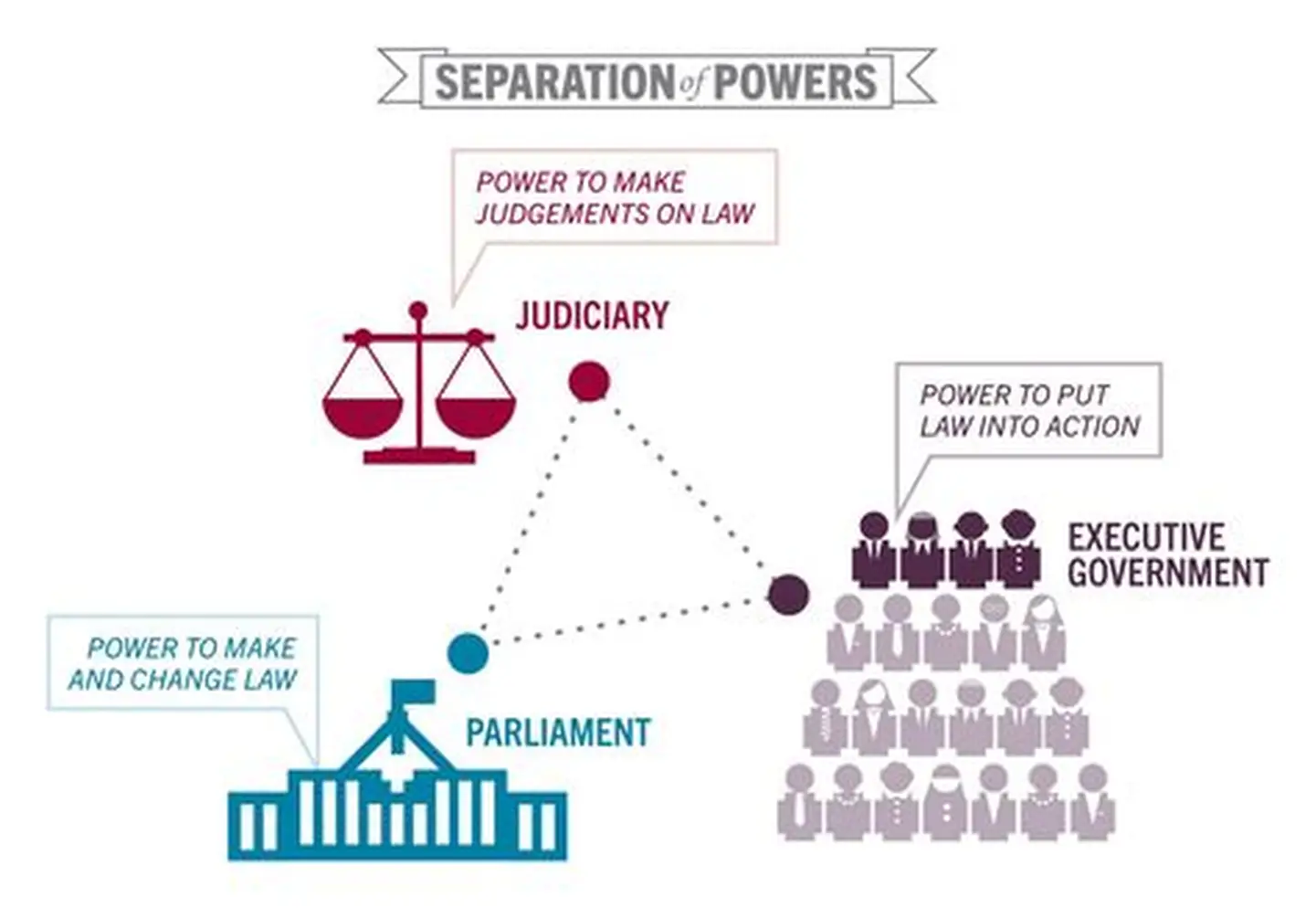
CAMA 2020 vests day-to-day management in the board of directors, not in the shareholders.[14] Shareholders cannot override the board’s ordinary business decisions by vote.[15] What they can do is alter the articles or remove the directors themselves, as seen in Automatic Self-Cleansing Filter Syndicate Co Ltd v Cuninghame.[16] Beyond voting, minority shareholders do have statutory remedies for genuinely abusive conduct, principally derivative actions and relief for unfair prejudice, but these are narrow, court-based remedies rather than a general licence to weigh in on operations.[17]
This clean boundary between ownership and management extends to corporate assets as well. Holding a one-per-cent equity stake entitles an investor to one per cent of the voting rights and a proportionate share of the company’s financial success, not a one-per-cent direct claim over the refinery’s physical assets.[18] And the actual percentage an investor ends up holding depends on the final allotment, which may fall short of what was applied for, and is subject to dilution from future share issuances unless the shareholder exercises whatever pre-emption rights apply to maintain their stake.[19]
So When Does a Shareholder Start Seeing Profit?
The Refinery’s prospectus figures, reported consistently across outlets, show roughly $1.82 billion in net profit for the first half of 2026, against a loss of about $476 million for the whole of 2025.[20] But profit sitting in a company’s accounts is not the same thing as a dividend sitting in a shareholder’s bank account. Under CAMA 2020, a dividend must be validly declared out of distributable profits before shareholders become entitled to it; directors may instead choose to hold profit back as reserves, whether for reinvestment or debt repayment.[21] A profitable year and a modest, or even a zero, dividend can both be entirely lawful. And even where a dividend is declared, it is typically paid in cash to the shareholder’s bank account through the share registrar; it is not released automatically the moment the company reports a profit.[22]
None of this makes the meme wrong to find humour in the moment, Nigerians rarely need permission for that. It simply means the joke and the law are describing two different things: the joke describes a feeling of ownership; the law describes a bundle of rights, carefully defined, class by class, and enforceable only within the limits CAMA 2020 sets for it. Understanding which of the two governs a ₦5,250 subscription is the difference between an informed investor and one waiting on a phone call from Aliko Dangote that was never going to come.
Share Price Is Not Cash
Once trading begins, the shares will carry a price on the Nigerian Exchange that moves with every trade, and Reuters has reported that trading is expected to start in late November.[23] A rise in that price is a paper gain. It is set between buyers and sellers, and the company is not a party to their trades. If a share bought at ₦525 changes hands at ₦700, the refinery has paid nobody anything; another investor has simply agreed to pay the seller more. The gain becomes money only when you sell and the sale settles, less brokerage charges and any applicable taxes. The reverse is equally true: prices fall, and nothing obliges the market to return to ₦525.
Cash from the company reaches a shareholder by one route, a dividend validly declared out of distributable profits.[24] A shareholder can watch the price double and receive nothing from the company, or receive a dividend while the price drifts down. The market answers the first question; the directors answer the second.
IPO Application Is Not Guaranteed Allocation
Applying for 1,000 shares does not mean receiving 1,000 shares. In law, an application is an offer by the investor to take shares, and the contract forms only when the company allots them, as Household Fire and Carriage Accident Insurance Co Ltd v Grant illustrates.[25] Nothing binds the company to give you everything you asked for. The base offer is 4.1 billion new shares, with room for up to 30% more subject to SEC approval, and the offer is not underwritten. Reports on the prospectus say final allotment depends on several factors, including a wide spread of shareholders.[26] If applications exceed the shares available, some investors will be scaled back, and money paid for shares not allotted should be returned under the prospectus terms and SEC rules.[27] Applying early, or loudly on X, changes none of this.
Limited Liability
Limited liability is the reason ordinary people can invest at all. For a company limited by shares, a member’s liability is confined to any amount unpaid on their shares.[28] Shares bought in a public offer are paid for in full, so there is nothing further for the company to call. If the refinery’s fortunes collapsed, the shareholder could not be asked for more money to meet its debts.
What it does not do is protect the investment itself. It caps what you can be asked to pay; it says nothing about what your shares will be worth. A shareholder in a failing company can lose every naira invested, and the law offers no remedy for that. Nor does it shield anyone from their own conduct: a person who personally guarantees a company’s loan owes on the guarantee, and courts will sometimes look behind the corporate form where it is used to cloak fraud, as in Marina Nominees Ltd v Federal Board of Inland Revenue.[29]
“The Company Owes Money, Do I Owe It?”
One version of the meme asks what happens if the refinery owes banks or suppliers: is the new shareholder now in debt too? No. The company is a person in its own right, so its debts are its own, and a creditor’s claim runs against the company and its assets, not upwards to its members. Salomon shows how firm this is. Mr Salomon controlled the company and was also its secured creditor, and when it failed his security ranked ahead of the unsecured creditors; the House of Lords refused to disregard the company because it was his creature.[30] If that separation protected the man in control, it protects a subscriber holding ten shares.
This is also where “my partner” fails. Partners generally answer for the firm’s debts personally; shareholders do not. The investor takes the benefit of the company structure and, in return, gives up any claim to the company’s assets or to its running.
Where Does the IPO Money Go?
In an offer for subscription, the company issues new shares and the proceeds go to the company. In an offer for sale, existing shareholders sell shares they already hold, and the proceeds go to them. This offer is the first kind: up to 4.1 billion new ordinary shares, about 3.3% of the enlarged share capital.[31] After offer costs of roughly 1.93% of gross proceeds, the net sum of around ₦2.11 trillion is earmarked for the refinery’s expansion programme.[32] Investors should know which kind they are joining because it tells them what their money does. A subscription funds the business and dilutes existing holders; a sale funds the sellers and leaves the company’s capital unchanged.
The Prospectus vs The Meme
A prospectus is a regulated document. The SEC approves it before a public offer proceeds, and those who issue it can face civil and criminal liability for untrue statements.[33] The common law has long held issuers answerable for deliberate or reckless misstatements, as in Derry v Peek.[34] It sets out the terms of the offer, the financial position, the use of proceeds and the risk factors. A meme carries none of that. A WhatsApp broadcast promising “guaranteed allocation” has no regulator behind it and nobody answerable for it, and an offer drawing millions of first-time investors is exactly where fraudsters operate. Read the prospectus, use the approved subscription channels named on the official offer site, deal only with licensed intermediaries, and check anything surprising against the SEC.[35]
CONCLUSION: WHAT BEING A SHAREHOLDER REALLY MEANS
The jokes will fade; the legal position will not. A person who subscribes acquires shares in one company, with the rights and limits set by CAMA 2020, the company’s articles and the prospectus: a vote, a seat at general meetings, a claim to dividends if and when declared, limited inspection rights and pre-emption on certain new issues. They come with real risk. The price may fall, dividends may be small or absent, and the allotment may be smaller than hoped.
What the subscriber does not acquire is the refinery, a slice of its tankers, a place in the boardroom or a line to its founder. That separation is not a technicality working against the small investor; it is the arrangement that makes a ₦5,250 subscription possible, capped in its exposure and defined in its rights. Enjoy the memes, and read the prospectus too. What you are buying is a legal interest in a company, with specific rights, potential returns and genuine investment risk, not a piece of one man’s property.
ENDNOTES
[1]Dangote Petroleum Refinery, ‘Learn’ (Dangote Refinery IPO) <https://ipo.dangote.com/learn> accessed 21 September 2026.
[2]‘Call Dangote, We Need a Board Meeting: Nigerian Refinery IPO Sparks Meme Frenzy’ Reuters (18 September 2026) <https://www.reuters.com/world/africa/call-dangote-we-need-board-meeting-nigerian-refinery-iposparks-meme-frenzy-2026-09-18/> accessed 21 September 2026.
[3]‘The Dangote Refinery IPO: What It Means for Investors, Corporate Governance and Nigeria’s Capital Market’ The Cable (Lagos) <https://www.thecable.ng/the-dangote-refinery-ipo-what-it-means-for-investors-corporate-governance-and-nigerias-capital-market/> accessed 21 September 2026.
[4]Companies and Allied Matters Act 2020 (CAMA 2020), s 42(2).
[5]Salomon v A Salomon & Co Ltd [1897] AC 22 (HL).
[6]Macaura v Northern Assurance Co Ltd [1925] AC 619 (HL).
[7]Borland’s Trustee v Steel Brothers & Co Ltd [1901] 1 Ch 279.
[8]CAMA 2020, s 138.
[9]CAMA 2020, s 143.
[10]CAMA 2020, s 140(1) and s 140 generally.
[11]CAMA 2020, s 168(1) and s 168 generally, on additional votes where a preferential dividend remains in arrears for more than twelve months.
[12]CAMA 2020, s 144.
[13]CAMA 2020, ss 138, 142, 248, 426–427.
[14]CAMA 2020, s 87(3).
[15]CAMA 2020, s 87(4).
[16]Automatic Self-Cleansing Filter Syndicate Co Ltd v Cuninghame [1906] 2 Ch 34 (CA).
[17]CAMA 2020, ss 346–347.
[18]Macaura (n 6).
[19]CAMA 2020, s 142(1)–(2).
[20]‘Dangote Refinery Posts $1.82 Billion Profit Ahead of Landmark IPO’ Financial Nigeria (2026) <https://www.financialnigeria.com/dangote-refinery-posts-1-82-billion-profit-ahead-of-landmark-ipo-news-3094.html> accessed 21 September 2026.
[21]CAMA 2020, ss 426–428.
[22]CAMA 2020, s 430.
[23]‘Nigeria’s Dangote Refinery launches $1.6bn IPO in Africa’s largest share sale’ NewsBase <https://newsbase.com/story/nigeria-s-dangote-refinery-launches-1-6bn-ipo-in-africa-s-largest-share-sale-467705> accessed 3 October 2026.
[24]CAMA 2020 (n 4) ss 426–428.
[25]Household Fire and Carriage Accident Insurance Co Ltd v Grant (1879) 4 Ex D 216 (CA).
[26]‘Dangote Refinery IPO prospectus: the N2.15tn offer explained’ Technext24 <https://technext24.com/news/dangote-refinery-unveils-ipo-prospectus/> accessed 3 October 2026.
[27]Dangote Petroleum Refinery and Petrochemicals FZE, Prospectus <https://ipo.dangote.com/prospectus.pdf> accessed 3 October 2026.
[28]CAMA 2020 (n 4) s 21.
[29]Marina Nominees Ltd v Federal Board of Inland Revenue (1986) 2 NWLR (Pt 20) 48 (SC).
[30]Salomon (n 5).
[31]Prospectus (n 27).
[32]‘Dangote Refinery IPO: Everything You Need to Know’ Bamboo <https://learn.investbamboo.com/dangote-refinery-ipo-everything-you-need-to-know/> accessed 3 October 2026.
[33]Investments and Securities Act 2025; CAMA 2020 (n 4).
[34]Derry v Peek (1889) 14 App Cas 337 (HL).
[35]Securities and Exchange Commission, Nigeria <https://sec.gov.ng> accessed 3 October 2026.
****************************************************************************************
This work is published under the free legal awareness project of Sabi Law Foundation (www.SabiLaw.org) funded by the law firm of Bezaleel Chambers International (www.BezaleelChambers.com). The writer was not paid or charged any publishing fee. You too can support the legal awareness projects and programs of Sabi Law Foundation by donating to us. Donate here and get our unique appreciation certificate or memento.
DISCLAIMER:
This publication is not a piece of legal advice. The opinion expressed in this publication is that of the author(s) and not necessarily the opinion of our organisation, staff and partners.
PROJECTS:
🛒 Take short courses, get samples/precedents and learn your rights at www.SabiLaw.org
🎯 Publish your legal articles for FREE by sending to: [email protected]
🎁 Receive our free Daily Law Tips & other publications via our website and social media accounts or join our free whatsapp group: Daily Law Tips Group 6
KEEP IN TOUCH:
Get updates on all the free legal awareness projects of Sabi Law (#SabiLaw) and its partners, via:
YouTube: SabiLaw
Twitter: @Sabi_Law
Facebook page: SabiLaw
Instagram: @SabiLaw.org_
WhatsApp Group: Free Daily Law Tips Group 6
Telegram Group: Free Daily Law Tips Group
Facebook group: SabiLaw
Email: [email protected]
Website: www.SabiLaw.org
ABOUT US & OUR PARTNERS:
This publication is the initiative of the Sabi Law Foundation (www.SabiLaw.org) funded by the law firm of Bezaleel Chambers International (www.BezaleelChambers.com). Sabi Law Foundation is a Not-For-Profit and Non-Governmental Legal Awareness Organization based in Nigeria. It is the first of its kind and has been promoting free legal awareness since 2010.
DONATION & SPONSORSHIP:
As a registered not-for-profit and non-governmental organisation, Sabi Law Foundation relies on donations and sponsorships to promote free legal awareness across Nigeria and the world. With a vast followership across the globe, your donations will assist us to increase legal awareness, improve access to justice, reduce common legal disputes and crimes in Nigeria. Make your donations to us here or contact us for sponsorship and partnership, via: [email protected] or +234 903 913 1200.
**********************************************************************************